



Head – Human Resources & General Affairs, SMAS India, Strategic Business Coordination

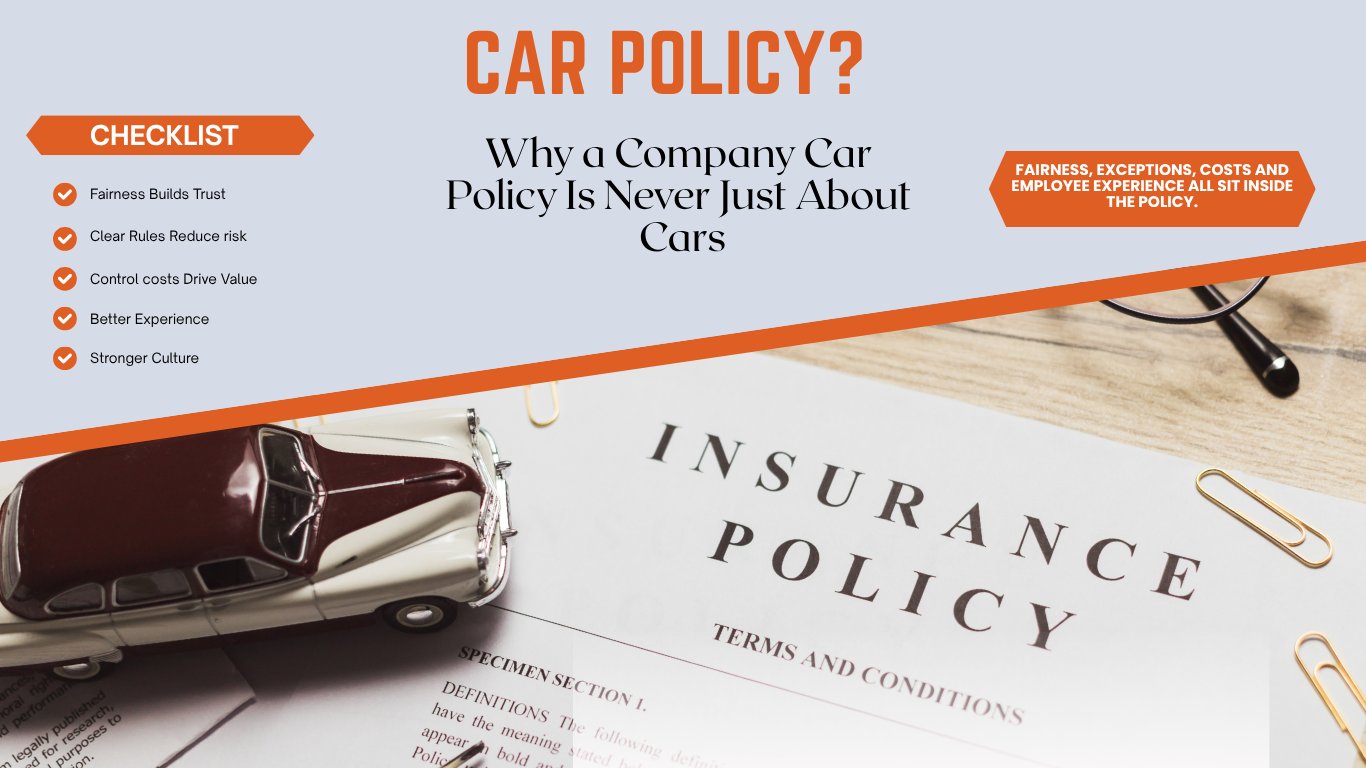
Why a Company Car Policy is Never Just About Cars
Leadership Talk: Why a Company Car Policy is Never Just About Cars
A company car policy is never just a car policy.
It may begin with defining vehicle eligibility, model categories, and monthly limits. But in practice, it touches far more than the car itself.
It influences how employees view fairness, how managers handle exceptions, how General Affairs teams manage operations, and how consistently an organisation applies its own rules.
Beyond Vehicles: The Real Questions
The most difficult questions are rarely about the vehicles themselves. They are about policy:
- Eligibility criteria – Who qualifies, and why?
- Basis of entitlement – Should it depend on designation, role, or business need?
- Transfers – What happens when an employee moves to another city?
- Costs – Who pays for fuel, insurance, or accidental damage?
- Personal use – How should personal use be treated?
- Exits – What happens if an employee exits before the lease ends?
- Exceptions – Who has the authority to approve exceptions?
The Risk of Routine Exceptions
A policy may look clear on paper and still create confusion in practice. The problem usually begins when exceptions become routine.
- One employee receives a different vehicle category.
- Another gets an extended replacement period.
- A third is allowed a benefit outside the defined structure.
Individually, each decision may appear reasonable. Together, they create inconsistency. Employees start comparing outcomes instead of understanding principles. Managers spend time defending decisions. HR and GA teams are left interpreting rules that were never designed for every real situation.
What Makes a Strong Policy
A strong company car policy should do more than define entitlement. It should establish:
- Clear eligibility principles
- Consistent approval authority
- Defined responsibilities for both employee and company
- Practical rules for transfer, damage, exit, and replacement
- Structured exception process
- Periodic review as roles, technology, and mobility needs evolve
The best policy is not necessarily the most generous one. It is the one employee can understand, managers can apply, and operating teams can administer without unnecessary ambiguity.
Conclusion
A company car may be a mobility benefit. But the policy behind it is a reflection of how the organization handles fairness, governance, and employee experience.
At SMAS India, we believe policies must be living frameworks—reviewed periodically, aligned with business needs, and designed to balance employee satisfaction with operational clarity.
When was your company car policy last reviewed—not only from a vehicle-cost perspective, but from the employee and operational point of view?
For business enquiries, please contact us at: reach_us@smasindia.com
FAQs
Can employees use company cars for personal trips?
Yes, but only within defined limits. Personal use must be declared, and costs such as fuel or tolls may be borne by the employee depending on policy terms
What happens if an employee relocates to another city?
The policy should specify whether the car is retained, exchanged, or surrendered. Transfers must be handled consistently to avoid perceived unfairness.
Who pays for accidental damage?
Insurance generally covers major damage, but minor costs or negligence may be the employee’s responsibility. Clear rules prevent disputes.
What if an employee exits before the lease ends?
The company typically reclaims the vehicle and settles lease obligations. Employees should not be penalized beyond contractual terms, but clarity is essential.
How are exceptions handled?
Exceptions should be rare, documented, and approved only by authorized senior management. A structured process ensures fairness and prevents misuse.